Senegal enacts budget by decree while its IMF programme awaits approval
Senegal's fiscal path, a looser mobile money rule and strong Ivorian bond demand shape borrowing conditions as Brent oil averages $125.
Written by AI from 6 linked sources · Method
What Happened
BCEAO lets mobile money issuers invest more of their float
Under a BCEAO instruction in force since 2 November, sight deposits must cover at least 65% of e-money outstanding, down from 75%. The other 35% may go to term deposits, public debt or BRVM-listed debt. 3
UEMOA
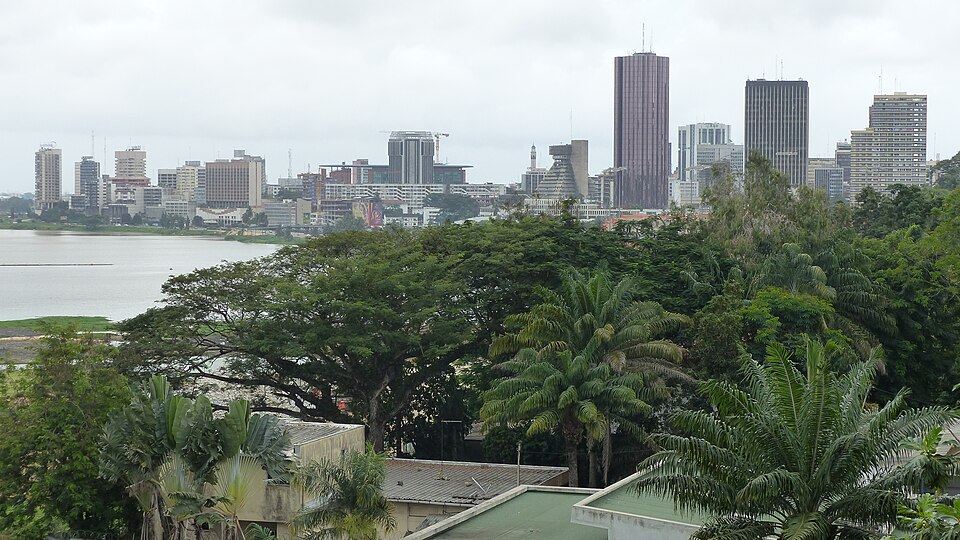
Côte d'Ivoire raises 110 billion CFA francs at auction
On 24 November Côte d'Ivoire raised 110 billion CFA francs against 100 billion offered, with bids of about 202 billion. It accepted only 3-year bonds at 6.26% and 5-year bonds at 7.03%. 4
Burkina Faso's economy rebounds 1.6% in second quarter
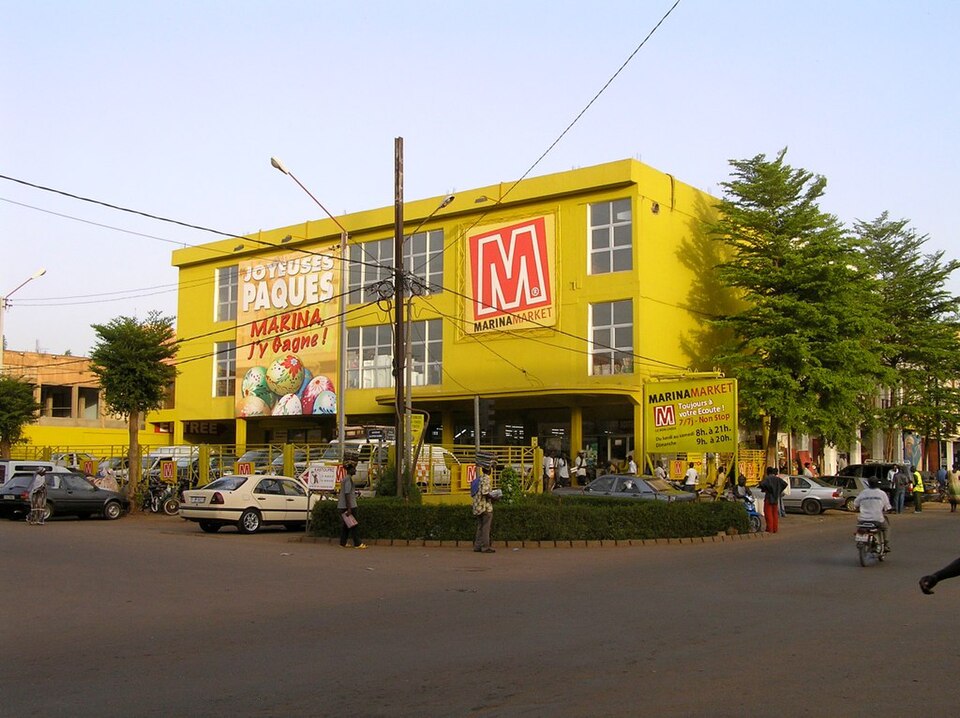
Quarterly national accounts from the statistics institute INSD show real GDP grew 1.6% in Q2 2026 after a 1.4% contraction in Q1. Consumption and investment led; rising imports weighed. 5


Source: IMF, World Economic Outlook (October 2026)
Data
| Country | Public debt (% of GDP) |
|---|---|
| Senegal | 127.7 |
| Guinea-Bissau | 75.1 |
| Togo | 64.9 |
| Benin | 59.3 |
| Côte d'Ivoire | 57.1 |
| Burkina Faso | 53.2 |
| Niger | 45.5 |
| Mali | 40.3 |
Senegal: 2025, the latest year the IMF has published.
Source: IMF, World Economic Outlook (October 2026)
Data
| Country | Inflation (%) |
|---|---|
| Mali | 3.0 |
| Guinea-Bissau | 2.5 |
| Côte d'Ivoire | 2.2 |
| Burkina Faso | 2.1 |
| Senegal (2025) | 1.4 |
| Togo | 1.1 |
| Benin | 0.8 |
| Niger | −1.9 |
What It Means
Senegal's government owes a lot: one commentary puts its public debt at 132% of a year's economic output at end-2024. It used a decree to put a revised budget into force after parliament rejected it, a step linked to winning a loan programme from the International Monetary Fund (IMF), which lends to governments in difficulty.
Elsewhere, borrowing looks easier: investors offered Côte d'Ivoire twice what it sought. A new central bank rule lets mobile money firms place more customer balances in government bonds, which could add buyers. Oil near $125 a barrel raises fuel import costs, as Mali's shortages show.
Senegal's decision to enact its supplementary budget by decree, after the National Assembly rejected it, follows the IMF-backed fiscal framework: the IMF has said board approval of the $2.2 billion extended credit facility depends on implementing it. Debt service is heavy, with 645 billion CFA francs of external interest paid in nine months against 229 billion domestically. Paying the 2033 bond coupon on time suggests market obligations are being prioritised while the programme is pending.
Funding conditions look supportive elsewhere. Côte d'Ivoire's auction was covered about twice. The BCEAO's lower floor for sight deposits (bank balances withdrawable at once) backing e-money, money held in phone wallets, could channel some funds into government paper. The main external pressure is oil: Brent averaged $125 in October, nearly double a year earlier, and a dollar now costs about 600 CFA francs, up from 567.
Senegal's decree removes a budget-authority obstacle to IMF board consideration but adds domestic political risk to execution. Interest paid in nine months totals about 874 billion CFA francs, roughly 74% external. The dollar's rise from 566.6 to 599.9 CFA francs over a year, about 6%, lifts the local-currency cost of external service; about $1.1 billion of bond repayments fall due in 2026-2028. Sangomar output of about 100,000 barrels a day at high oil prices is a potential offset, though the minister says revenues are not yet materialising.
On liquidity, cutting the e-money sight-deposit floor from 75% to 65% releases 10 points of outstanding float toward term deposits and securities; the amount depends on e-money outstanding, which our data do not show. With the policy rate at 3.0% since March and Ivorian coverage at 201.9%, 3- and 5-year yields of 6.26% and 7.03% imply term spreads of roughly 3 to 4 points. The BRVM Composite fell 1.5% on 25 November to 464.78.
Brent at $125 against $63.6 a year earlier is a terms-of-trade loss for fuel importers. The IMF projects Mali's current account moving from 0.1% to -3.4% of GDP in 2026 and inflation at 3.0%; Burkina's Q2 import drag fits this pattern. The view would change with a confirmed IMF board date for Senegal, evidence of fuel price pass-through in Sahel inflation, or a sharp fall in oil prices.
The figure under each spine is its last value. Published only as far as shown: Senegal to 2025.
Source: IMF, World Economic Outlook (October 2026)
Data
| Year | Benin | Burkina Faso | Côte d'Ivoire | Guinea-Bissau | Mali | Niger | Senegal | Togo |
|---|---|---|---|---|---|---|---|---|
| 2015 | −5.6 | −2.1 | −2.0 | −3.2 | −1.5 | −6.7 | −3.7 | −7.0 |
| 2016 | −4.3 | −3.1 | −3.0 | −5.3 | −3.3 | −4.5 | −3.3 | −7.0 |
| 2017 | −4.2 | −6.9 | −3.3 | −1.3 | −2.4 | −4.1 | −3.0 | −0.2 |
| 2018 | −3.0 | −4.4 | −2.9 | −4.8 | −4.0 | −3.0 | −3.7 | −0.6 |
| 2019 | −0.5 | −3.4 | −2.2 | −3.9 | −1.4 | −3.6 | −13.9 | 1.7 |
| 2020 | −4.7 | −5.2 | −5.4 | −9.6 | −4.6 | −4.8 | −9.6 | −7.0 |
| 2021 | −2.5 | −7.4 | −4.9 | −5.9 | −4.1 | −6.1 | −13.7 | −4.5 |
| 2022 | −5.6 | −10.9 | −6.7 | −6.1 | −4.1 | −6.8 | −16.1 | −7.8 |
| 2023 | −4.1 | −6.9 | −5.1 | −8.2 | −3.0 | −5.3 | −14.8 | −6.3 |
| 2024 | −3.1 | −5.8 | −4.0 | −7.3 | −2.2 | −4.3 | −13.7 | −6.8 |
| 2025 | −2.7 | −1.5 | −3.0 | −6.7 | −1.5 | −2.9 | −6.4 | −3.2 |
| 2026 | −3.3 | −3.8 | −3.8 | −4.0 | −2.8 | −3.4 | n/a | −3.4 |
| 2027 | −3.1 | −3.3 | −3.5 | −3.5 | −2.8 | −3.0 | n/a | −3.0 |
| 2028 | −2.9 | −3.0 | −3.0 | −3.0 | −2.8 | −3.0 | n/a | −3.0 |
| 2029 | −2.9 | −3.0 | −3.0 | −3.0 | −2.8 | −3.0 | n/a | −3.0 |
| 2030 | −2.9 | −3.0 | −3.0 | −3.0 | −2.8 | −3.0 | n/a | −3.0 |
| 2031 | −2.9 | −3.0 | −3.0 | −3.0 | −2.9 | −3.0 | n/a | −3.0 |
For You
-
HouseholdsFuel shortages in parts of Mali and oil near $125 a barrel raise the risk of higher transport and food prices.
-
StudentsBurkina Faso's quarterly accounts show how consumption, investment and imports combine to shape growth, a clear case study.
-
Entrepreneurs and SMEsDiesel-dependent firms in Mali face supply gaps, and a stronger dollar raises the CFA franc cost of imported inputs.
-
InvestorsStrong Ivorian auction demand and looser e-money placement rules point to ample regional liquidity; Senegal's IMF timing remains uncertain.
-
Researchers and policy analystsThe BCEAO e-money instruction offers a test of how wallet float shifts into term deposits and public debt.
Source: IMF, World Economic Outlook (October 2026)
Data
| Year | Burkina Faso (%) | Union median (%) |
|---|---|---|
| 2010 | 8.4 | 5.6 |
| 2011 | 6.6 | 3.0 |
| 2012 | 6.5 | 5.5 |
| 2013 | 5.8 | 5.5 |
| 2014 | 4.3 | 6.3 |
| 2015 | 3.9 | 5.8 |
| 2016 | 6.0 | 5.8 |
| 2017 | 6.2 | 5.5 |
| 2018 | 6.6 | 5.5 |
| 2019 | 5.9 | 5.5 |
| 2020 | 2.0 | 1.8 |
| 2021 | 6.9 | 6.3 |
| 2022 | 1.6 | 5.5 |
| 2023 | 3.0 | 5.0 |
| 2024 | 4.8 | 6.2 |
| 2025 | 5.3 | 6.4 |
| 2026 | 4.4 | 5.5 |
| 2027 | 4.8 | 5.7 |
| 2028 | 4.8 | 5.5 |
| 2029 | 4.8 | 5.5 |
| 2030 | 4.8 | 5.5 |
| 2031 | 4.9 | 5.5 |
Outlook
Source: World Bank Commodity Price Data (Pink Sheet)
Data
| Month | Brent crude oil ($/bbl) |
|---|---|
| Nov 2020 | 43.2 |
| Dec 2020 | 49.9 |
| Jan 2021 | 54.6 |
| Feb 2021 | 62.0 |
| Mar 2021 | 65.2 |
| Apr 2021 | 64.8 |
| May 2021 | 68.0 |
| Jun 2021 | 73.1 |
| Jul 2021 | 74.4 |
| Aug 2021 | 70.0 |
| Sep 2021 | 74.6 |
| Oct 2021 | 83.7 |
| Nov 2021 | 80.8 |
| Dec 2021 | 74.3 |
| Jan 2022 | 85.5 |
| Feb 2022 | 95.8 |
| Mar 2022 | 115.6 |
| Apr 2022 | 105.8 |
| May 2022 | 112.4 |
| Jun 2022 | 120.1 |
| Jul 2022 | 108.9 |
| Aug 2022 | 98.6 |
| Sep 2022 | 90.2 |
| Oct 2022 | 93.1 |
| Nov 2022 | 91.1 |
| Dec 2022 | 80.9 |
| Jan 2023 | 83.1 |
| Feb 2023 | 82.7 |
| Mar 2023 | 78.5 |
| Apr 2023 | 84.1 |
| May 2023 | 75.7 |
| Jun 2023 | 74.9 |
| Jul 2023 | 80.1 |
| Aug 2023 | 86.2 |
| Sep 2023 | 94.0 |
| Oct 2023 | 91.1 |
| Nov 2023 | 83.2 |
| Dec 2023 | 77.9 |
| Jan 2024 | 80.2 |
| Feb 2024 | 83.8 |
| Mar 2024 | 85.4 |
| Apr 2024 | 90.1 |
| May 2024 | 82.0 |
| Jun 2024 | 82.6 |
| Jul 2024 | 85.3 |
| Aug 2024 | 80.9 |
| Sep 2024 | 74.3 |
| Oct 2024 | 75.7 |
| Nov 2024 | 74.4 |
| Dec 2024 | 73.8 |
| Jan 2025 | 79.2 |
| Feb 2025 | 75.2 |
| Mar 2025 | 72.6 |
| Apr 2025 | 67.7 |
| May 2025 | 64.2 |
| Jun 2025 | 71.5 |
| Jul 2025 | 71.0 |
| Aug 2025 | 68.2 |
| Sep 2025 | 68.0 |
| Oct 2025 | 64.7 |
| Nov 2025 | 63.6 |
| Dec 2025 | 62.7 |
| Jan 2026 | 66.8 |
| Feb 2026 | 71.1 |
| Mar 2026 | 103.7 |
| Apr 2026 | 120.4 |
| May 2026 | 107.5 |
| Jun 2026 | 85.4 |
| Jul 2026 | 83.4 |
| Aug 2026 | 90.9 |
| Sep 2026 | 116.8 |
| Oct 2026 | 125.0 |
New Forecasts
All Forecasts62%
Will the IMF's next World Economic Outlook project Mali's 2026 average consumer price inflation at or above 3.0%, checked on 2027-04-30?
Persistent fuel shortages and Brent near $125 in October make an upward or unchanged revision more likely than a cut, though food prices could offset.
Checked 1 May 2027
Sources
- The 19 November 2026 decree, or the choice of the IMF over the Constitution SenePlus · 25 Nov 2026
- Senegal debt: $31.25 million of interest paid on 2033 bonds Benin Web TV · 23 Nov 2026
- West Africa: Côte d'Ivoire raises 110 billion CFA francs on the WAEMU financial market allAfrica · 25 Nov 2026
- Burkina Faso: Economic activity rebounds 1.6% in Q2 2026 Burkina24 · 23 Nov 2026
- Mali: 58 million litres of fuel received in one week APA News · 23 Nov 2026